

Understanding SWPPP: Why It Matters for Your Construction Project
Overview
When starting a construction project, most people focus on timelines, budgets, and design. What often gets overlooked is stormwater management. That’s where a Stormwater Pollution Prevention Plan (SWPPP) comes in.
A SWPPP isn’t just paperwork. It’s a required plan that helps control runoff, prevent pollution, and keep your project compliant with environmental regulations.
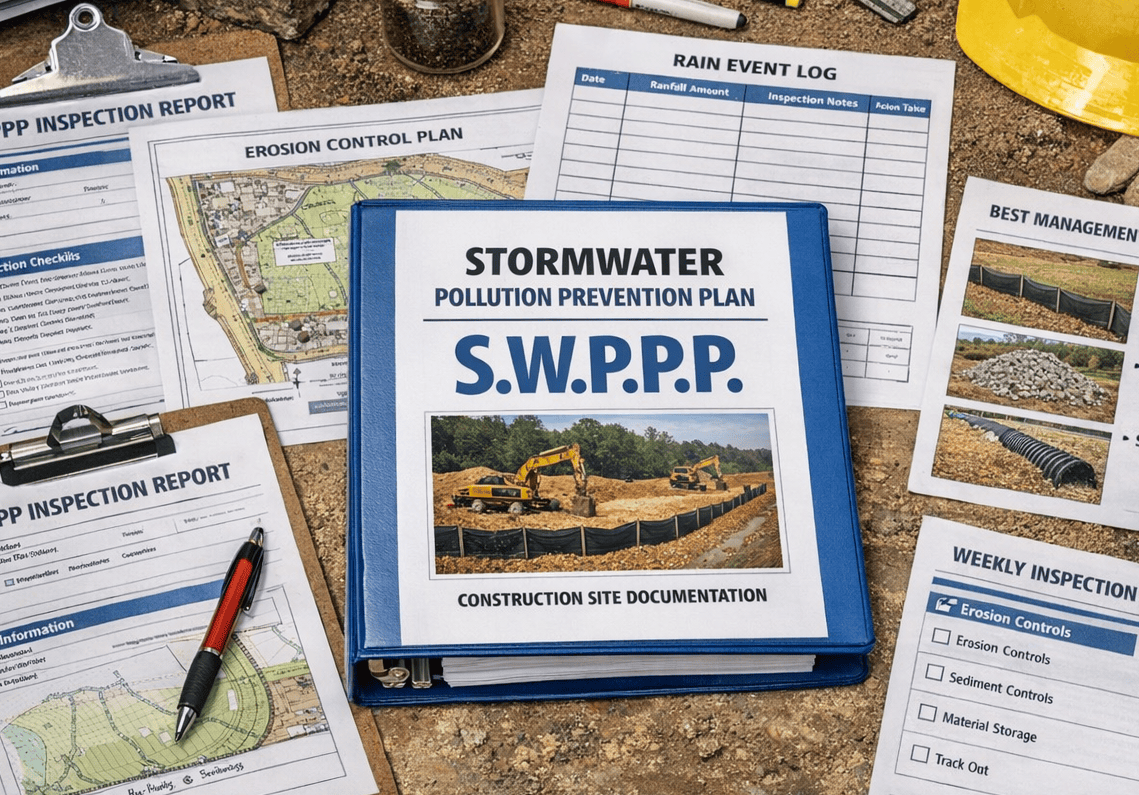
What is a SWPPP?
A SWPPP (Stormwater Pollution Prevention Plan) outlines how a construction site will manage stormwater runoff to prevent pollutants like sediment, debris, and chemicals from leaving the site.
It typically includes:
- Site maps and drainage flow
- Erosion and sediment control measures
- Inspection schedules
- Maintenance procedures
For projects that disturb one acre or more of land, a SWPPP is usually mandatory.
Why SWPPP Compliance Matters
Ignoring SWPPP requirements can lead to more than just paperwork issues.
1. Avoid costly fines
Regulatory agencies conduct inspections, and violations can result in significant penalties.
2. Protect the environment
Uncontrolled runoff can carry sediment and pollutants into nearby waterways, affecting ecosystems and water quality.
3. Keep your project on track
Non-compliance can cause delays, stop-work orders, or failed inspections.
Common SWPPP Measures on Site
A well-executed SWPPP includes practical, visible solutions on the ground. Some of the most common include:
- Silt fences to control sediment movement
- Inlet protection to prevent debris from entering storm drains
- Stabilized construction entrances to reduce track-out
- Erosion control blankets for exposed soil areas
These measures are not “set and forget.” They require regular inspection and maintenance to remain effective.
Need help understanding requirements?
Get clear guidance on SWPPP, inspections, and compliance processes.
Simple explanations, no jargon
The Role of Ongoing Inspections
SWPPP compliance doesn’t end after installation. Routine inspections are critical, especially after rain events.
Inspections help ensure:
- Controls are functioning properly
- Damaged measures are repaired quickly
- Documentation stays up to date
Keeping detailed inspection logs is just as important as the physical controls on site.
How to Stay Compliant
The easiest way to stay compliant is to treat SWPPP as part of your core construction process, not an afterthought.
- Plan early before breaking ground
- Work with experienced professionals
- Schedule regular inspections
- Keep documentation organized
Final Thoughts
SWPPP compliance protects your project, your timeline, and the environment. It’s not just about meeting regulations—it’s about running a responsible and efficient job site.
If you’re planning a project and need help with SWPPP, civil engineering, or environmental compliance, working with the right team can make the process straightforward and stress-free.
Get expert guidance anytime
Talk to a specialist who can walk you through every compliance step.
Clarity before you make costly mistakes
Table of Contents
Get a Free Quote
Tell us what you need and we’ll respond with pricing details.
No obligation. Response within 24 hours.
Related Compliance Articles


Latest Insights
-
Another one
Overview When starting a construction project, most people focus on timelines, budgets, and design. What often gets overlooked is stormwater management. That’s where a Stormwater Pollution Prevention Plan (SWPPP) comes in. A SWPPP isn’t just paperwork. It’s a required plan that helps control runoff, prevent pollution, and keep your project compliant with environmental regulations. What…
-
Testing blog
Overview When starting a construction project, most people focus on timelines, budgets, and design. What often gets overlooked is stormwater management. That’s where a Stormwater Pollution Prevention Plan (SWPPP) comes in. A SWPPP isn’t just paperwork. It’s a required plan that helps control runoff, prevent pollution, and keep your project compliant with environmental regulations. What…
-
Understanding SWPPP: Why It Matters for Your Construction Project
Overview When starting a construction project, most people focus on timelines, budgets, and design. What often gets overlooked is stormwater management. That’s where a Stormwater Pollution Prevention Plan (SWPPP) comes in. A SWPPP isn’t just paperwork. It’s a required plan that helps control runoff, prevent pollution, and keep your project compliant with environmental regulations. What…