
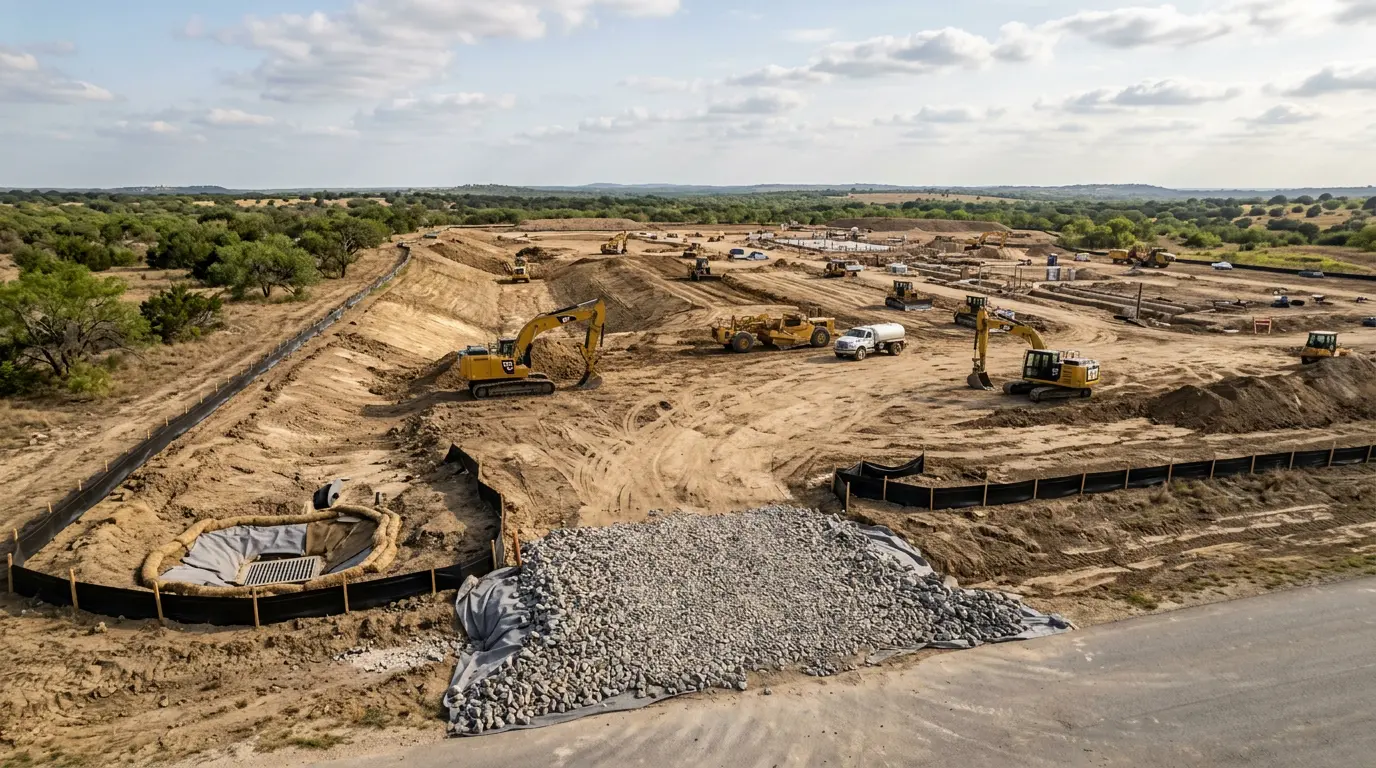
Do You Need a SWPPP in Texas? TCEQ’s Construction General Permit (TXR150000) Explained
Quick answer: Yes — if your Texas construction project disturbs one acre or more of land (or less if it’s part of a larger common plan of development), you need a Stormwater Pollution Prevention Plan (SWPPP) and authorization under the state’s Construction General Permit, TXR150000, administered by the Texas Commission on Environmental Quality (TCEQ). Unlike some states, Texas runs its own stormwater program (the TPDES), so you file with TCEQ — not the EPA. What you have to submit depends on how many acres you disturb.
If you’re breaking ground in Texas, here’s exactly what applies to your project.
Zila prepares SWPPPs for Texas construction projects.
From the plan to TCEQ filing, we handle it.
What is a SWPPP, and who requires it in Texas?
A SWPPP is a site-specific plan that keeps sediment and other pollutants out of stormwater runoff during construction. In Texas, it’s required under the Texas Pollutant Discharge Elimination System (TPDES) — the state-run version of the federal NPDES program. The permit that governs construction is TXR150000, TCEQ’s Construction General Permit (the current version took effect March 5, 2023). (New to SWPPPs? Start with What Is a SWPPP?.)
The acreage tiers: what you file depends on project size
Texas sorts construction sites into tiers, and your obligations scale with disturbed acreage:
- Less than 1 acre (and not part of a larger common plan): Generally no TXR150000 authorization is required — though local city or county rules may still apply.
- Small construction — 1 to less than 5 acres: You must prepare a SWPPP and post a construction site notice. This tier typically does not require submitting a Notice of Intent to TCEQ, but you must still comply fully with the permit.
- Large construction — 5 acres or more: You must prepare a SWPPP, post a site notice, and submit a Notice of Intent (NOI) to TCEQ through the STEERS system (and pay the associated fee) before construction begins.
Because a smaller lot can still be pulled in as part of a larger common plan of development, always total the full project’s disturbance — not just your piece.
How to get authorized under TXR150000
The process runs through TCEQ:
- Prepare your SWPPP for the site (this must be in place before you start).
- For large sites (5+ acres): submit a Notice of Intent (NOI) through TCEQ’s STEERS electronic system and pay the fee; wait for authorization to take effect.
- For small sites (1–5 acres): keep the SWPPP on-site and post the required construction site notice.
- Implement and inspect the SWPPP throughout the project, documenting inspections and any corrective actions.
- File a Notice of Termination (NOT) once the site is finally stabilized.
What goes into a Texas SWPPP?
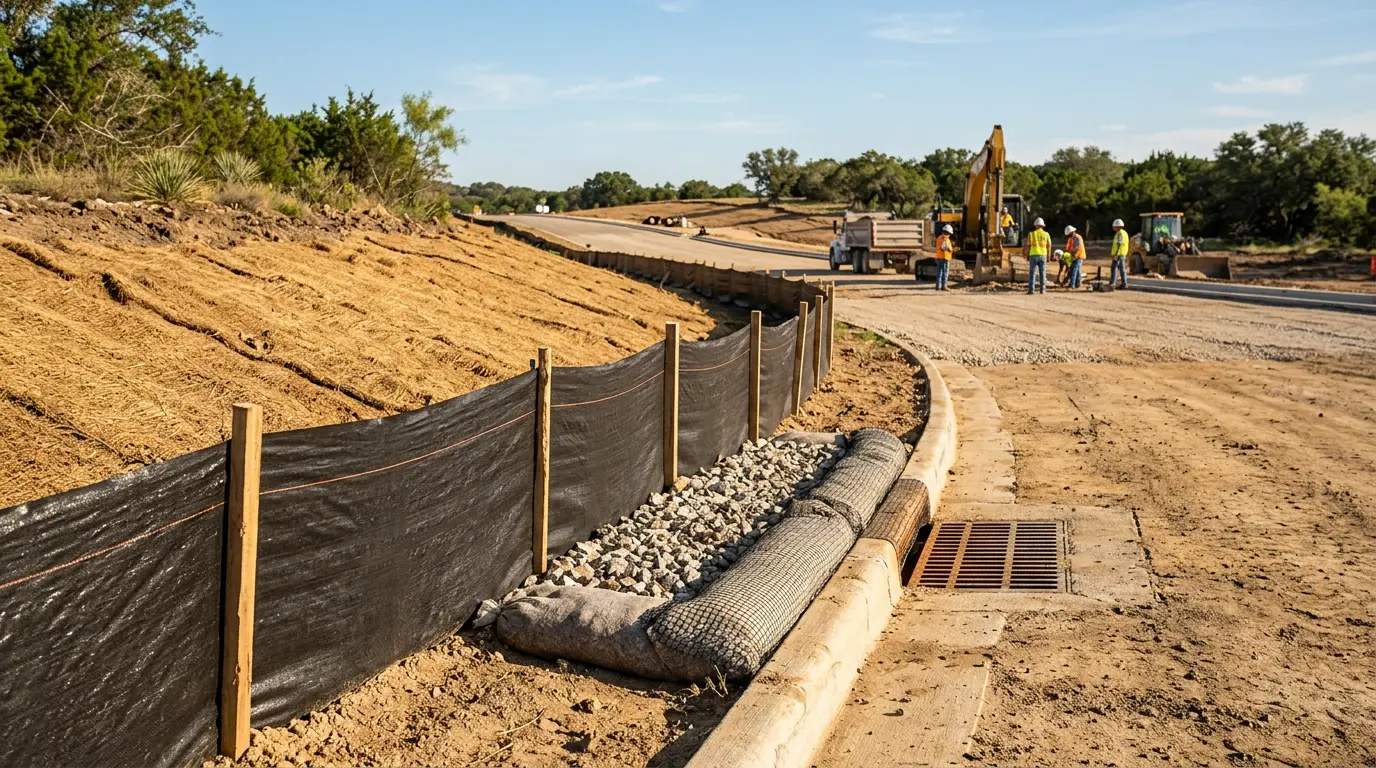
A compliant SWPPP includes a site and drainage description, an inventory of potential pollutant sources, the specific Best Management Practices (BMPs) — erosion controls, sediment controls, and good-housekeeping measures — plus an inspection schedule and recordkeeping procedures. On larger sites, TCEQ expects regular inspections and prompt maintenance of controls.
Don’t risk a TCEQ enforcement action or a stalled project.
Zila builds Texas SWPPPs that hold up to inspection.
What happens if you don’t comply?
Operating without required authorization, or failing to follow your SWPPP, can bring TCEQ enforcement — notices of violation and monetary penalties under the Texas Water Code and Clean Water Act — plus the possibility of a stalled project while you come into compliance. As with everywhere, prevention is far cheaper than a citation.
How Zila helps Texas builders
Zila prepares and manages SWPPPs for construction projects across Texas. We determine your acreage tier, prepare a site-specific SWPPP, handle the NOI filing through STEERS when required, select the right BMPs, and keep you inspection-ready from groundbreaking through your Notice of Termination.
Related reading: What Is a SWPPP? and SWPPP Violations & Fines.
Frequently Asked Questions
- Do I need a SWPPP in Texas?
Yes, if your project disturbs one acre or more (or less if it’s part of a larger common plan of development). It’s required under TCEQ’s Construction General Permit, TXR150000.
- Who regulates SWPPPs in Texas?
The Texas Commission on Environmental Quality (TCEQ), through the Texas Pollutant Discharge Elimination System (TPDES). Texas runs its own program, so you file with TCEQ rather than the EPA.
- What is TXR150000?
It’s the number of TCEQ’s Construction General Permit for stormwater discharges from construction activities. The current version took effect March 5, 2023.
- Do small construction sites need to file with TCEQ?
Sites disturbing 1 to less than 5 acres generally need a SWPPP and a posted construction site notice but typically don’t submit a Notice of Intent. Sites of 5 acres or more must submit an NOI through TCEQ’s STEERS system.
- How do I get a construction stormwater permit in Texas?
Prepare a SWPPP, and for large sites (5+ acres) submit a Notice of Intent through STEERS and pay the fee before starting. Implement and inspect the plan during construction, then file a Notice of Termination when the site is stabilized.
Table of Contents
Get a Free Quote
Tell us what you need and we’ll respond with pricing details.
No obligation. Response within 24 hours.
Related Compliance Articles


Latest Insights
-
The Best SWPPP Inspection Software: What to Look For
Quick answer: The best SWPPP inspection software isn’t the one with the longest feature list — it’s the one that keeps you ahead of your permit deadlines and produces records you can defend in an audit. In practice, that comes down to a handful of things that actually prevent violations: knowing the moment an inspection is…
-
SWPPP Requirements in Massachusetts: What Contractors Need to Know
Quick answer: If your Massachusetts construction project disturbs one acre or more of land (or less if it’s part of a larger common plan of development), you need a Stormwater Pollution Prevention Plan (SWPPP) and coverage under the Construction General Permit (CGP). In Massachusetts, that permit is issued and administered by the U.S. EPA, and coverage…
-
SWPPP vs. WPCP vs. WQMP: Which Does Your California Project Need?
Quick answer: These three California stormwater documents are easy to confuse, but they cover different things. A SWPPP (Stormwater Pollution Prevention Plan) controls pollution during construction on sites disturbing one acre or more, under the state Construction General Permit. A WPCP (Water Pollution Control Plan) does the same job for smaller construction projects (typically under an…