

SWPPP Violations & Fines in California: What Non-Compliance Really Costs
Quick answer: In California, a SWPPP violation happens when a construction site fails to have, follow, or properly document its Stormwater Pollution Prevention Plan. Consequences range from a written Notice of Violation to a full stop-work order — and financial penalties that can reach tens of thousands of dollars per day, per violation under the federal Clean Water Act and California Water Code. The most common violations are avoidable: missing inspections, failed BMPs, an outdated SWPPP, or building without permit coverage at all.
If an inspector shows up at your site tomorrow, would you pass? Here’s exactly what gets contractors cited — and how to make sure it never happens to you.
Zila is California’s most trusted name in preparing SWPPPs.
The cheapest insurance against a five-figure fine is a compliant plan.
What counts as a SWPPP violation?
A violation isn’t only “polluting a creek.” Regulators cite sites for paperwork and process failures just as often as actual discharges. The most common categories:
- No permit coverage. Disturbing one acre or more without enrolling in the Construction General Permit and obtaining a WDID number.
- No SWPPP on-site. The plan must be available at the site; a missing or inaccessible SWPPP is an automatic red flag.
- An outdated or generic SWPPP. A plan that doesn’t match current site conditions — or one that still cites the retired 2009 permit instead of the current Order 2022-0057-DWQ — signals non-compliance.
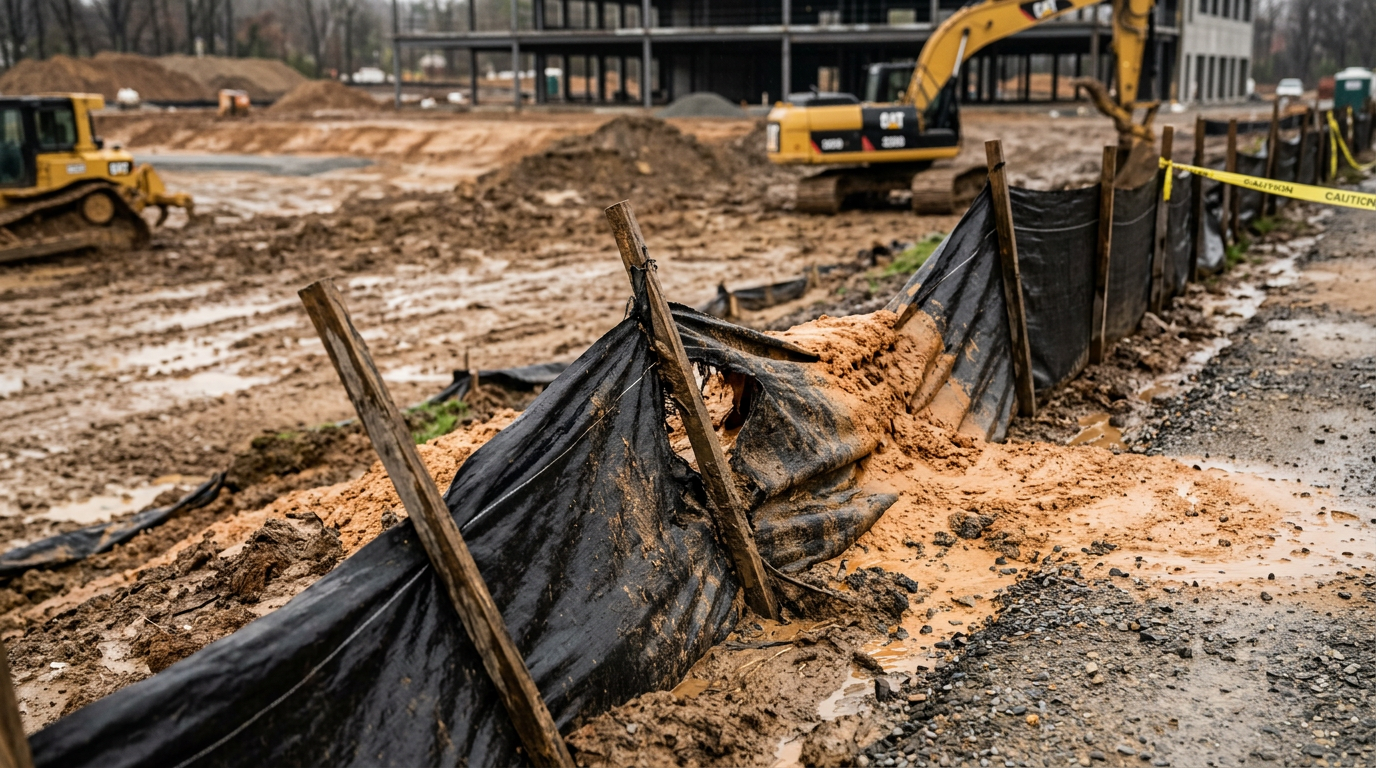
- Failed or missing BMPs. Silt fences knocked down, no inlet protection, no stabilized construction entrance, uncontrolled track-out onto public roads.
- Missed inspections and sampling. Skipping required QSP inspections or rain-event monitoring.
- Incomplete records. Inspection logs, rain-event reports, and corrective actions that aren’t documented in SMARTS.
Who enforces SWPPP compliance?
Enforcement comes from multiple directions, which is why violations are so easy to catch. The California State Water Resources Control Board and the nine Regional Water Quality Control Boards oversee the permit. Local city and county inspectors (public works, building, grading) check compliance before and during construction — and many won’t release a grading permit without a valid WDID number. On top of that, the Clean Water Act allows third-party citizen suits, meaning environmental groups can and do sue non-compliant sites directly.
What are the penalties for a SWPPP violation?
A well-executed SWPPP includes practical, visible solutions on the ground. Some of the most common include:
- Notice of Violation (NOV): a formal warning requiring you to fix the issue by a deadline.
- Administrative Civil Liability (ACL): monetary penalties assessed by the Water Board.
- Clean Water Act civil penalties: federal law allows fines of tens of thousands of dollars per day, per violation — and these maximums are adjusted upward for inflation over time. Because each day and each separate violation can count individually, totals climb fast.
- Stop-work orders: the most expensive outcome for most builders. A halted site means idle crews and equipment, blown deadlines, and liquidated-damages exposure — often far more than the fine itself.
The takeaway: the direct fine is rarely the biggest cost. The schedule hit is.
Don’t gamble your schedule on a self-made plan.
Zila’s certified QSDs and QSPs keep you inspection-ready from enrollment through termination.
The 5 most common (and most avoidable) violations
Nearly every citation traces back to one of these:
- Starting work before the SWPPP and WDID are in place. Get coverage before you break ground.
- Letting BMPs fail after a storm. BMPs need maintenance, not just installation.
- Never amending the SWPPP. As grading gives way to vertical construction, the plan must be updated.
- Skipping inspections during the busy season. Required inspections don’t pause when the schedule gets tight.
- Poor recordkeeping. If it isn’t documented in SMARTS, regulators treat it as if it didn’t happen.
How to stay compliant (and inspection-ready)
Staying clean comes down to five habits: enroll and obtain your WDID before any soil disturbance; have a site-specific SWPPP prepared by a QSD; install and maintain the right BMPs for your Risk Level; complete every required QSP inspection and rain-event report; and keep your documentation current in SMARTS. A qualified QSD/QSP does all of this for you — and is on your side if an inspector or regulator ever comes calling.
Facing a violation right now?
If you’ve already received a Notice of Violation or a stop-work order, act fast — response deadlines are short, and prompt corrective action can significantly reduce your exposure. Zila can step in, assess the site, correct BMP and documentation gaps, and coordinate with regulators to get you back to work.
Protect your project with Zila
Zila is California’s most trusted name in preparing SWPPPs. Our certified QSDs and QSPs prepare and file SWPPPs, manage SMARTS enrollment (NOI/NOT and WDID), select and monitor the right BMPs, and keep your records inspection-ready — so you never face an avoidable fine or shutdown. We serve contractors, developers, and public agencies across California, including Los Angeles, Anaheim, Santa Ana, Moreno Valley, and Victorville.
Related reading: What Is a SWPPP? and Do I Need a SWPPP?
Frequently Asked Questions
- What is a SWPPP violation?
A SWPPP violation occurs when a construction site fails to have, follow, or properly document its Stormwater Pollution Prevention Plan — including missing permit coverage, an absent or outdated plan, failed BMPs, skipped inspections, or incomplete records.
- How much can you be fined for a SWPPP violation in California?
Penalties can reach tens of thousands of dollars per day, per violation under the Clean Water Act and California Water Code, and those maximums are periodically adjusted upward for inflation. Because each day and each separate violation can be counted individually, totals add up quickly.
- Can a SWPPP violation stop my project?
Yes. Regulators or local inspectors can issue a stop-work order until the site is brought into compliance, which often costs more in delays than the fine itself.
- Who checks for SWPPP compliance?
The State and Regional Water Quality Control Boards, plus local city and county inspectors. The Clean Water Act also allows third-party citizen suits against non-compliant sites.
- What should I do if I get a Notice of Violation?
Act immediately — response deadlines are short. Bring in a qualified QSD/QSP to correct BMP and documentation issues and coordinate with regulators; prompt corrective action can reduce penalties.
Table of Contents
Get a Free Quote
Tell us what you need and we’ll respond with pricing details.
No obligation. Response within 24 hours.



Latest Insights
-
EPA SWPPP: The Federal Construction General Permit Explained
Quick answer: An EPA SWPPP is a Stormwater Pollution Prevention Plan required under the federal Construction General Permit (CGP) — the National Pollutant Discharge Elimination System (NPDES) permit the U.S. EPA issues for construction that disturbs one acre or more of land (or less, if part of a larger common plan of development). A SWPPP is a nationwide Clean Water…
-
Does a SWPPP Save Money? How the Right Plan Cuts Costs
Quick answer: Yes — a well-designed SWPPP saves money in three ways: it right-sizes your BMPs so you don’t over-build controls you don’t need or under-build ones that fail; it prevents costly incidents — a sediment discharge or failed control can trigger emergency cleanup, replacement BMPs, and stricter regulator-imposed requirements; and it avoids fines and stop-work orders that can cost tens of…
-
Do I Need a SWPPP? California Construction General Permit Requirements
Quick answer: In California, you need a SWPPP if your construction project disturbs one acre or more of soil — or less than one acre but is part of a larger common plan of development or sale. Coverage is required under the statewide Construction General Permit (Order 2022-0057-DWQ, effective September 1, 2023). Even some sub-acre projects need one if…