
SWPPP vs. WPCP vs. WQMP: Which Does Your California Project Need?
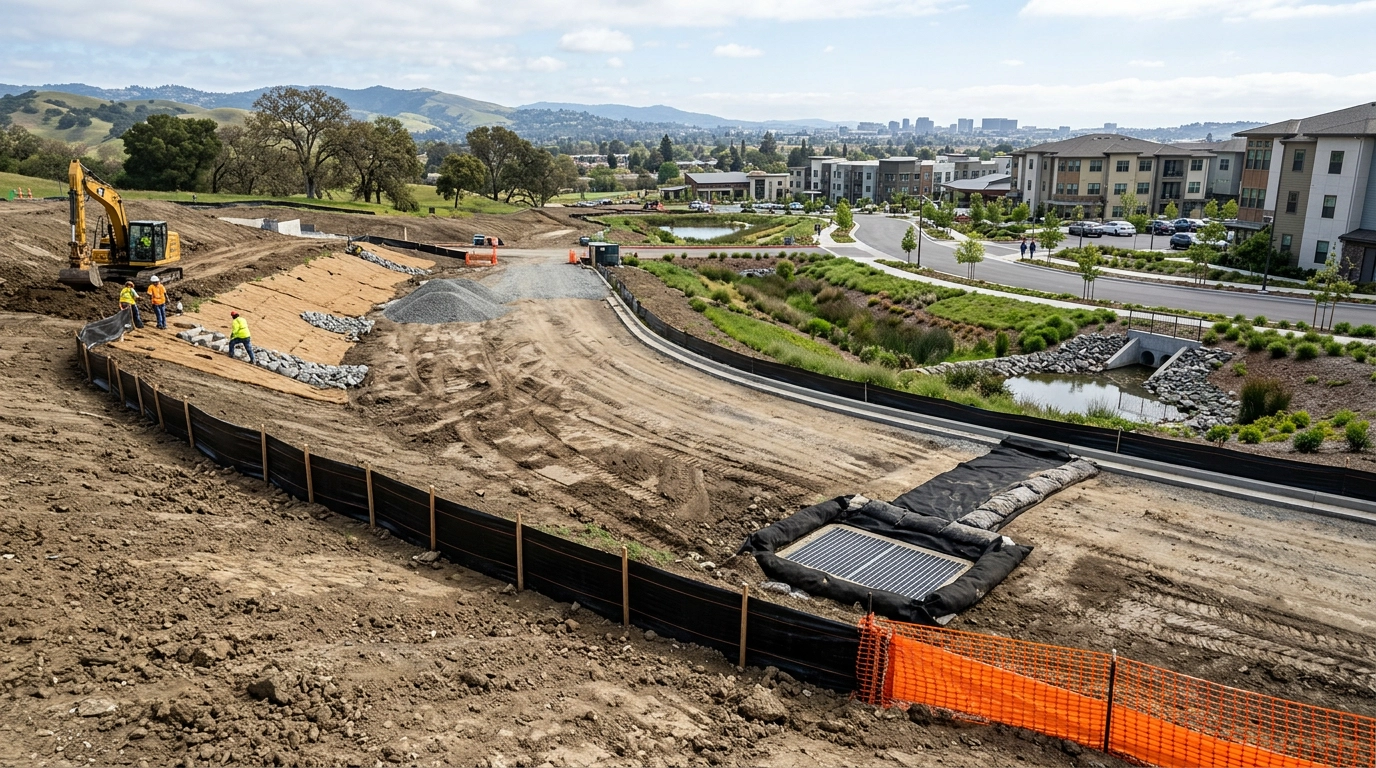
Quick answer: These three California stormwater documents are easy to confuse, but they cover different things. A SWPPP (Stormwater Pollution Prevention Plan) controls pollution during construction on sites disturbing one acre or more, under the state Construction General Permit. A WPCP (Water Pollution Control Plan) does the same job for smaller construction projects (typically under an acre) when a local agency or contractor — often Caltrans — requires it. A WQMP (Water Quality Management Plan) is different: it addresses long-term, post-construction stormwater from the finished development, and is required by local MS4 permits for qualifying “Priority Development Projects.” The simplest way to think about it: SWPPP and WPCP protect the site while you build; WQMP protects the watershed after you’re done.
Many California projects end up needing more than one of these. Here’s how to tell them apart.
Zila is California’s most trusted name in stormwater compliance.
SWPPP, WPCP, or WQMP — we’ll tell you exactly which your project needs.
At-a-glance comparison
|
SWPPP |
WPCP |
WQMP |
|
|
Full name |
Stormwater Pollution Prevention Plan |
Water Pollution Control Plan |
Water Quality Management Plan |
|
Phase it covers |
During construction |
During construction |
After construction (permanent) |
|
When it’s required |
Sites disturbing 1 acre+ (or part of a larger common plan) |
Smaller sites (typically <1 acre) when a local agency/owner/contract requires it |
Qualifying new development or redevelopment (“Priority Development Projects”) |
|
Regulatory basis |
State Construction General Permit (NPDES) |
Local agency / contract (commonly Caltrans) |
Local MS4 (municipal) stormwater permit |
|
Main goal |
Control sediment & pollutants from active construction |
Same, scaled to smaller jobs |
Treat & manage runoff from the completed, developed site |
|
Typical controls |
Temporary erosion & sediment BMPs |
Temporary erosion & sediment BMPs |
Permanent LID features (bioretention, infiltration, permeable paving) |
|
Filed / approved by |
State via SMARTS (WDID number issued) |
Local agency / contract manager |
Local city or county (planning/public works) |
|
Who prepares it |
Qualified SWPPP Developer (QSD) |
Qualified preparer (QSD ideal) |
Civil engineer / qualified professional |
What is a SWPPP?
A SWPPP is required under California’s Construction General Permit (Order 2022-0057-DWQ) for construction that disturbs one acre or more (or a smaller site that’s part of a larger common plan). It’s prepared and certified by a QSD, enrolled through the state SMARTS system, and results in a WDID number that local agencies often require before issuing a grading permit. Its job is to keep sediment and pollutants out of stormwater while the site is being built. (Full breakdown: What Is a SWPPP?.)
What is a WPCP?
A WPCP is essentially a lighter version of a SWPPP for smaller construction projects that fall below the one-acre Construction General Permit threshold but are still required to control pollution. It’s triggered by a local agency, project owner, or contract specification — most commonly on Caltrans work, where projects disturbing less than an acre need a WPCP, while jobs of an acre or more need a SWPPP (which then satisfies the WPCP requirement). A WPCP usually isn’t filed through SMARTS and doesn’t come with a WDID number.
What is a WQMP?
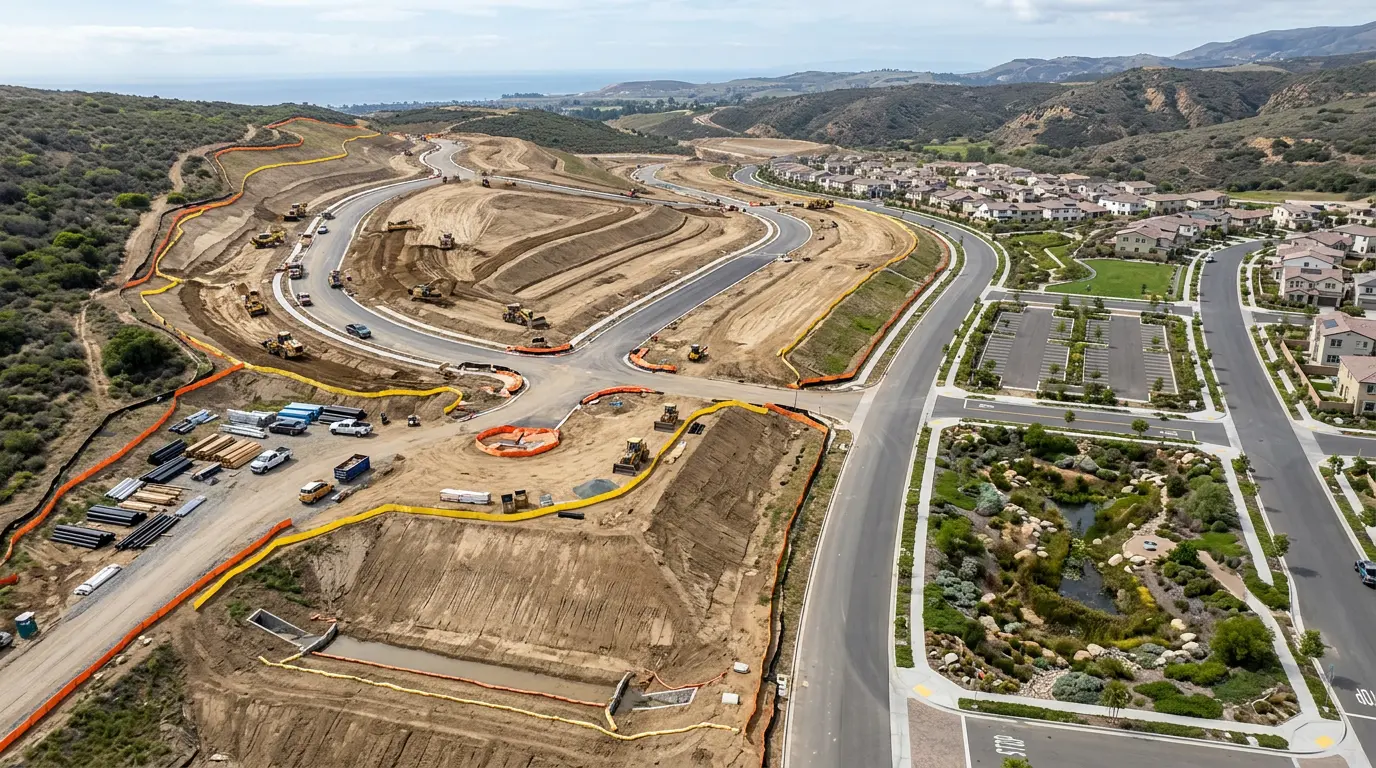
This is the one that trips people up, because it’s a completely different phase. A WQMP is a post-construction plan required by local MS4 (municipal storm sewer) permits — very common in Southern California (Riverside, Orange, San Bernardino counties and beyond). Instead of temporary controls for an active jobsite, it requires permanent Low Impact Development (LID) features — bioretention areas, infiltration, permeable pavement, and similar — that treat and manage stormwater from the finished development for the life of the project.
A WQMP is typically required for “Priority Development Projects” — categories and size thresholds (such as creating or replacing a certain amount of impervious area) defined by your local jurisdiction’s MS4 permit. It’s reviewed and approved by the city or county (not the state), usually as a condition of project or grading approval, and is generally prepared by a civil engineer. Because the exact triggers vary by county and city, always confirm against your local agency’s current requirements.
The key distinction: construction vs. post-construction
If you remember one thing, make it this:
- SWPPP and WPCP are temporary and construction-phase. They manage the mess of active earthwork and go away when the project is stabilized. They differ mainly by project size and which permit applies.
- WQMP is permanent and post-construction. It’s about the runoff the completed development will generate for decades, and it lives on in the site’s built-in treatment features.
That’s why a single project can need both a SWPPP (to build it) and a WQMP (to occupy it).
Which does your project need?
Work through it in this order:
- Are you disturbing one acre or more? → You need a SWPPP (state Construction General Permit).
- Under an acre, but a local agency, owner, or Caltrans contract requires a stormwater plan? → You likely need a WPCP.
- Is your project new development or significant redevelopment that meets your city/county’s “Priority Development Project” criteria? → You’ll also need a WQMP for permanent, post-construction treatment — regardless of the construction-phase plan.
When more than one applies (common on larger developments), you handle them together: the SWPPP or WPCP covers construction, and the WQMP covers the finished site. Getting this wrong is a frequent cause of permit delays — a qualified professional can map your exact obligations in one review.
How Zila helps
Zila is California’s most trusted name in stormwater compliance. We determine exactly which plans your project requires — SWPPP, WPCP, WQMP, or a combination — prepare and file each one, design the right temporary and permanent BMPs, and provide the inspections that keep you compliant from groundbreaking through occupancy. We work across California, including Los Angeles, Anaheim, Santa Ana, Riverside, Moreno Valley, and Victorville.
Related reading: What Is a SWPPP?, Do I Need a SWPPP?, and SWPPP Violations & Fines.
Frequently Asked Questions
- What’s the difference between a SWPPP, a WPCP, and a WQMP?
A SWPPP controls pollution during construction on sites disturbing one acre or more, under the state Construction General Permit. A WPCP does the same for smaller construction projects when a local agency or contract (often Caltrans) requires it. A WQMP is a post-construction plan required by local MS4 permits that manages long-term stormwater from the finished development using permanent LID features.
- Do I need both a SWPPP and a WQMP?
Often, yes. Larger development projects commonly need a SWPPP to manage stormwater during construction and a WQMP to manage runoff from the completed site. They cover different phases and are handled together.
- Is a WQMP the same as a SWPPP?
No. A SWPPP is temporary and construction-phase; a WQMP is permanent and post-construction. A SWPPP uses temporary erosion and sediment controls, while a WQMP requires permanent treatment features built into the finished development.
- When is a WPCP required instead of a SWPPP?
On Caltrans and many local projects, a WPCP is required for construction disturbing less than one acre; projects of one acre or more require a SWPPP, which satisfies the WPCP requirement.
- Who requires a WQMP in California?
Local municipalities under their MS4 stormwater permits, primarily for “Priority Development Projects.” Thresholds and categories vary by city and county, so confirm your local requirements.
Table of Contents
Get a Free Quote
Tell us what you need and we’ll respond with pricing details.
No obligation. Response within 24 hours.
Related Compliance Articles
- The Best SWPPP Inspection Software: What to Look For

- Do You Need a SWPPP in Texas? TCEQ’s Construction General Permit (TXR150000) Explained
- SWPPP Requirements in Massachusetts: What Contractors Need to Know
- SWPPP vs. WPCP vs. WQMP: Which Does Your California Project Need?
- EPA SWPPP: The Federal Construction General Permit Explained


Latest Insights
-
The Best SWPPP Inspection Software: What to Look For
Quick answer: The best SWPPP inspection software isn’t the one with the longest feature list — it’s the one that keeps you ahead of your permit deadlines and produces records you can defend in an audit. In practice, that comes down to a handful of things that actually prevent violations: knowing the moment an inspection is…
-
Do You Need a SWPPP in Texas? TCEQ’s Construction General Permit (TXR150000) Explained
Quick answer: Yes — if your Texas construction project disturbs one acre or more of land (or less if it’s part of a larger common plan of development), you need a Stormwater Pollution Prevention Plan (SWPPP) and authorization under the state’s Construction General Permit, TXR150000, administered by the Texas Commission on Environmental Quality (TCEQ). Unlike some…
-
SWPPP Requirements in Massachusetts: What Contractors Need to Know
Quick answer: If your Massachusetts construction project disturbs one acre or more of land (or less if it’s part of a larger common plan of development), you need a Stormwater Pollution Prevention Plan (SWPPP) and coverage under the Construction General Permit (CGP). In Massachusetts, that permit is issued and administered by the U.S. EPA, and coverage…