
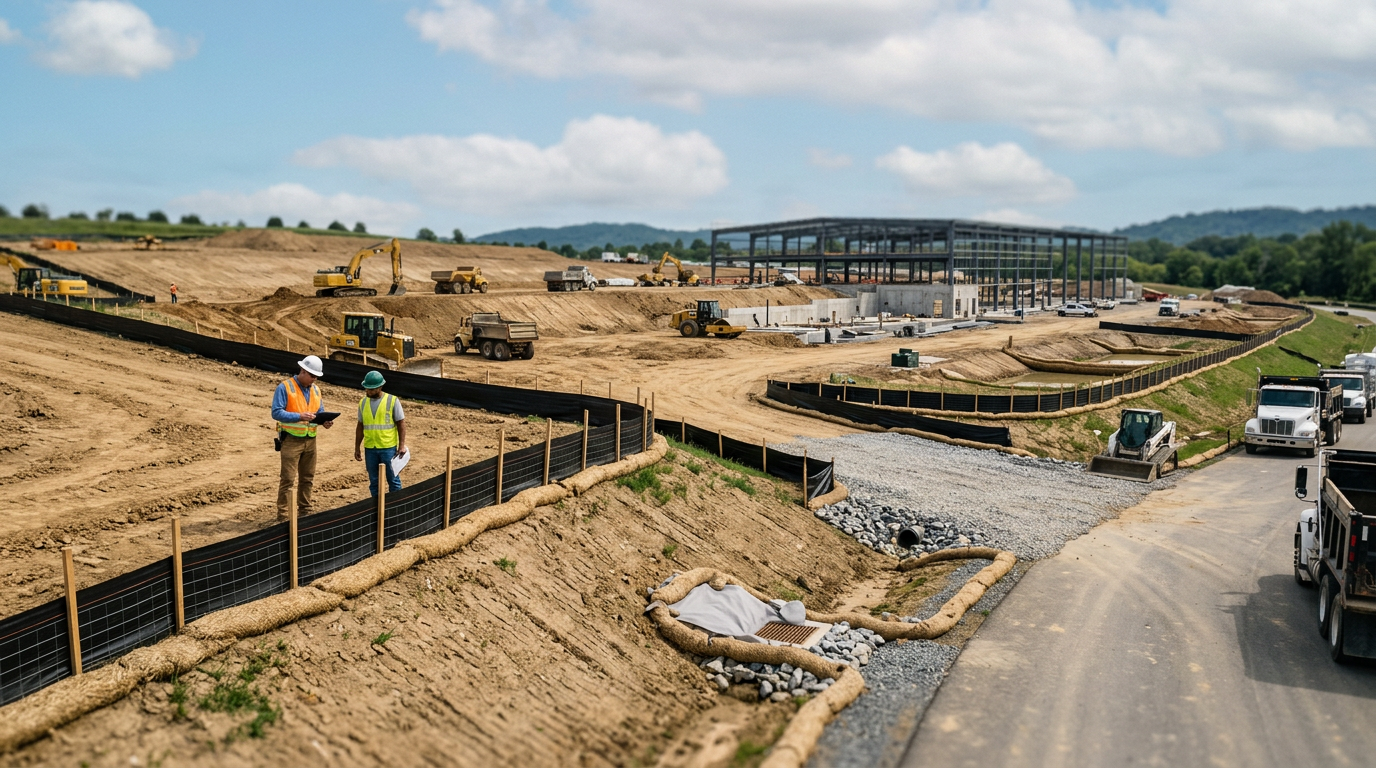
EPA SWPPP: The Federal Construction General Permit Explained
Quick answer: An EPA SWPPP is a Stormwater Pollution Prevention Plan required under the federal Construction General Permit (CGP) — the National Pollutant Discharge Elimination System (NPDES) permit the U.S. EPA issues for construction that disturbs one acre or more of land (or less, if part of a larger common plan of development). A SWPPP is a nationwide Clean Water Act requirement, but who issues your permit depends on your location: EPA is the permitting authority only in areas that haven’t been delegated the NPDES program, while most states run their own equivalent permit. Either way, you need a compliant SWPPP before you break ground.
If you build in more than one state — or in an area where EPA runs the program directly — this guide explains how the federal system works.
Zila is a trusted name in preparing SWPPPs.
We handle federal-permit and state-permit projects alike.
What is an EPA SWPPP?
A SWPPP (Stormwater Pollution Prevention Plan) is the site-specific document that describes how a construction project keeps sediment and pollutants out of storm drains, streams, and other waters of the United States. It’s required by the Clean Water Act, which prohibits discharging pollutants from a “point source” — including a construction site — without an NPDES permit.
For construction, that permit is the Construction General Permit (CGP). The CGP requires you to prepare and follow a SWPPP. When people say “EPA SWPPP,” they mean a SWPPP written to satisfy EPA’s version of the CGP, as opposed to a state-issued permit.
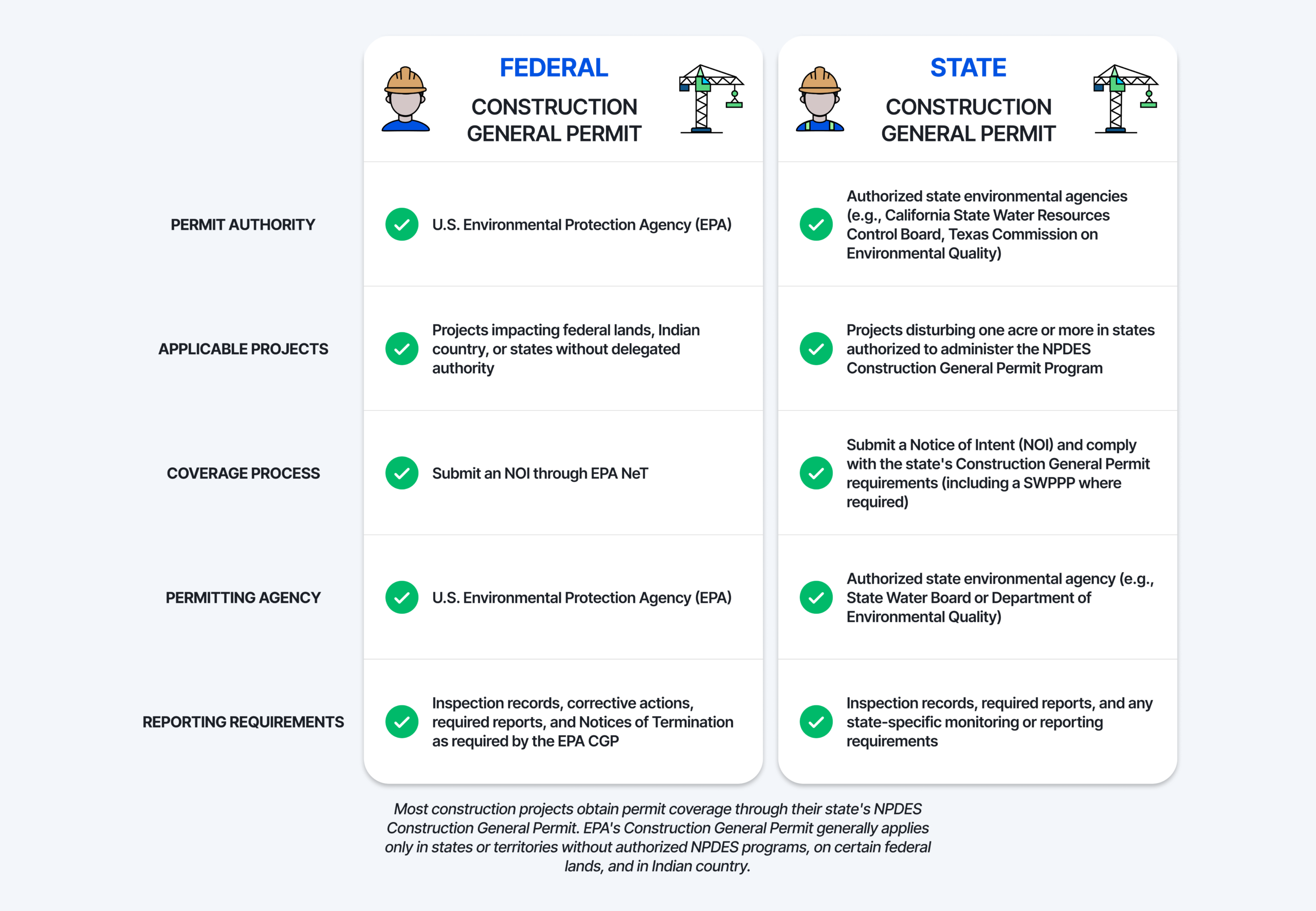
Federal vs. state permits: who issues yours?
This is the part that confuses most contractors. The SWPPP requirement is federal, but the Clean Water Act lets states, territories, and tribes apply to run the NPDES program themselves. The vast majority have.
- In “authorized” states (the majority): a state agency issues its own construction general permit. Those permits must be at least as stringent as EPA’s, but they have their own names, forms, and filing systems. California’s state permit is one example.
- In non-authorized areas, EPA is the permitting authority and its CGP applies directly. This includes a small number of non-delegated states plus most U.S. territories, all Indian country / tribal lands, and certain federal facilities and lands of exclusive federal jurisdiction.
Because the list of authorized vs. non-authorized jurisdictions changes over time, always confirm your project’s location against EPA’s current Authorization Status list before assuming which permit applies. When in doubt, a qualified SWPPP professional will tell you in minutes.
When is an EPA SWPPP required?
The federal threshold mirrors the state programs:
- 1 acre (43,560 sq ft) or more of land disturbance → a SWPPP and CGP coverage are required.
- Less than 1 acre, but part of a larger common plan of development or sale → also required.
- Certain smaller sites can still be designated for coverage if they discharge to a sensitive water.
“Land disturbance” includes clearing, grading, excavating, and stockpiling — not just building footprint.
The EPA 2022 Construction General Permit at a glance
EPA’s current permit is the 2022 CGP, which became effective February 17, 2022 and expires February 17, 2027. EPA modified it in 2025 (adding Lands of Exclusive Federal Jurisdiction), and the modified permit is now in effect across all EPA regions. Key features include:
- A written SWPPP prepared before you file for coverage.
- Erosion and sediment control BMPs, natural buffer or equivalent requirements near waters, and pollution-prevention practices.
- Inspections — typically every seven days, or every 14 days plus within 24 hours of a qualifying rain event, depending on the option selected.
- Stabilization deadlines for disturbed areas that are no longer being worked.
- Corrective-action and recordkeeping obligations documented throughout the project.
How to get coverage under EPA’s CGP
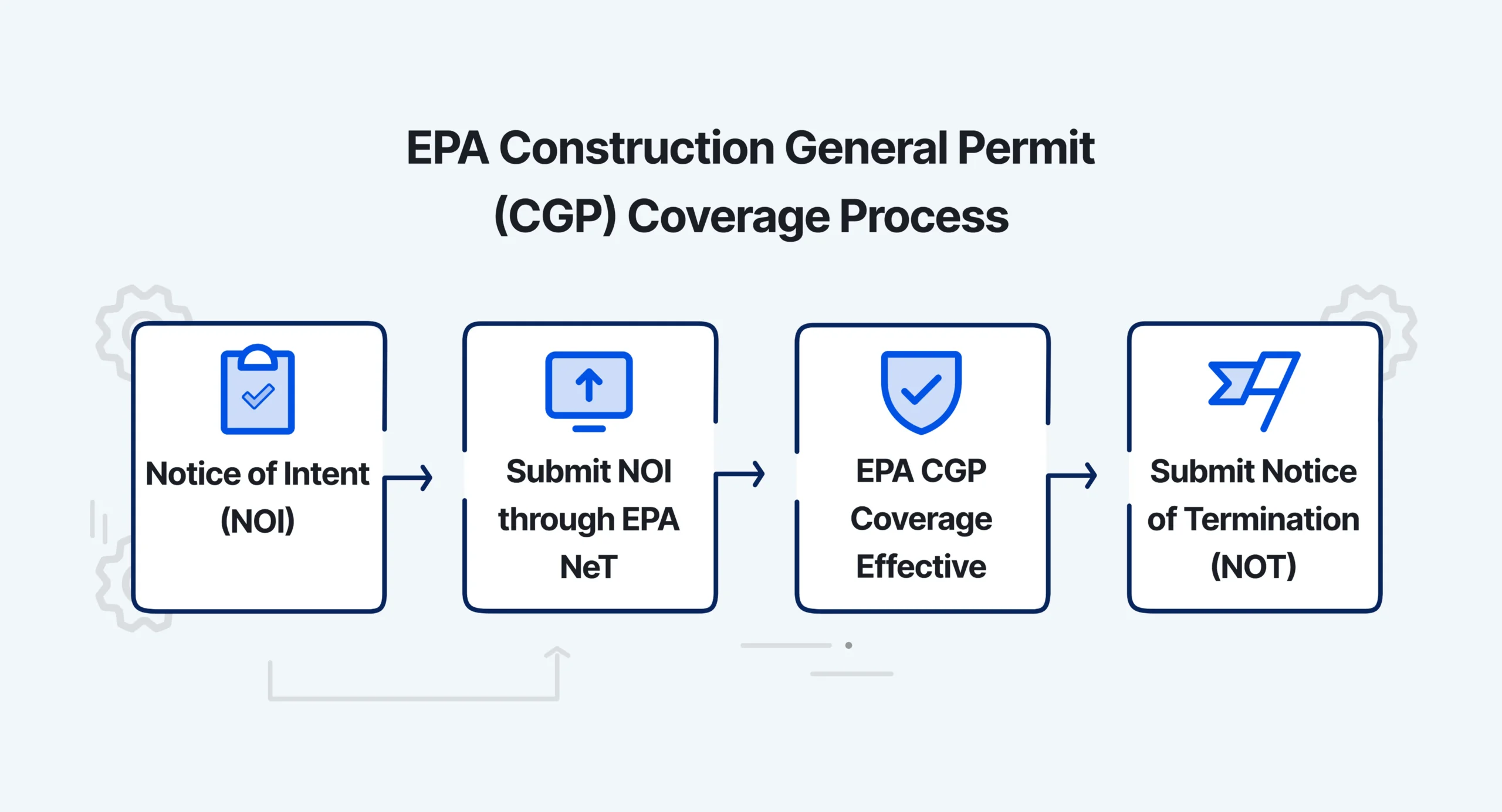
The process runs through EPA’s electronic system:
- Prepare the SWPPP for the site (this must exist before you file).
- File a Notice of Intent (NOI) through EPA’s NeT (NPDES eReporting Tool).
- Wait out the review/posting period — coverage becomes effective a set number of days after EPA posts your complete NOI.
- Implement and inspect the SWPPP throughout construction, keeping records.
- File a Notice of Termination (NOT) once the site is finally stabilized and construction is complete.
State programs follow the same general arc but use their own portals (for example, California uses the SMARTS system and issues a WDID number).
Why the SWPPP matters no matter who issues the permit
Whether your project falls under EPA’s CGP or a state permit, non-compliance carries the same Clean Water Act exposure: Notices of Violation, stop-work orders, and civil penalties that can reach tens of thousands of dollars per day, per violation. The permit name changes by location; the risk of getting it wrong does not. (See our guide on SWPPP Violations & Fines.)
How Zila helps
Zila is a trusted name in preparing SWPPPs. Our certified professionals prepare and amend SWPPPs, determine which permit applies to your site, handle the filings, select the right BMPs, and provide the inspections that keep you compliant — whether your project is covered by EPA’s Construction General Permit or a state-issued permit. We bring the same rigor to federal-permit projects that we bring to our California work.
Related reading: What Is a SWPPP?, Do I Need a SWPPP?, and SWPPP Violations & Fines.
Frequently Asked Questions
- What is an EPA SWPPP?
It’s a Stormwater Pollution Prevention Plan prepared to meet EPA’s federal Construction General Permit — the NPDES permit required for construction that disturbs one acre or more, in areas where EPA is the permitting authority.
- Does every state use the EPA SWPPP permit?
No. Most states are authorized to run their own NPDES construction permit, which must be at least as stringent as EPA’s. EPA’s CGP applies directly only in non-authorized states, most territories, tribal lands, and certain federal lands.
- What is the acreage threshold for a federal SWPPP?
One acre (43,560 square feet) of land disturbance, or less if the project is part of a larger common plan of development or sale.
- How do I get coverage under the EPA Construction General Permit?
Prepare a SWPPP, file a Notice of Intent (NOI) through EPA’s NeT electronic system, wait out the posting period until coverage is effective, implement and inspect the plan, and file a Notice of Termination (NOT) at completion.
- How long is the EPA 2022 CGP valid?
The 2022 CGP became effective February 17, 2022 and expires February 17, 2027; it was modified in 2025 and is in effect across all EPA regions.
Table of Contents
Get a Free Quote
Tell us what you need and we’ll respond with pricing details.
No obligation. Response within 24 hours.



Latest Insights
-
Does a SWPPP Save Money? How the Right Plan Cuts Costs
Quick answer: Yes — a well-designed SWPPP saves money in three ways: it right-sizes your BMPs so you don’t over-build controls you don’t need or under-build ones that fail; it prevents costly incidents — a sediment discharge or failed control can trigger emergency cleanup, replacement BMPs, and stricter regulator-imposed requirements; and it avoids fines and stop-work orders that can cost tens of…
-
SWPPP Violations & Fines in California: What Non-Compliance Really Costs
Quick answer: In California, a SWPPP violation happens when a construction site fails to have, follow, or properly document its Stormwater Pollution Prevention Plan. Consequences range from a written Notice of Violation to a full stop-work order — and financial penalties that can reach tens of thousands of dollars per day, per violation under the federal Clean Water Act and…
-
Do I Need a SWPPP? California Construction General Permit Requirements
Quick answer: In California, you need a SWPPP if your construction project disturbs one acre or more of soil — or less than one acre but is part of a larger common plan of development or sale. Coverage is required under the statewide Construction General Permit (Order 2022-0057-DWQ, effective September 1, 2023). Even some sub-acre projects need one if…