

What Is a SWPPP? A Plain-English Guide for California Contractors
Quick answer: A SWPPP (Stormwater Pollution Prevention Plan) is a site-specific document that identifies the pollution risks on a construction site and the best management practices (BMPs) used to keep sediment and contaminants out of storm drains and waterways. In California, a SWPPP is required for most construction projects that disturb one acre or more of soil under the statewide Construction General Permit (Order 2022-0057-DWQ). It must be written and certified by a Qualified SWPPP Developer (QSD) and implemented on-site by a Qualified SWPPP Practitioner (QSP).
If you’ve been told your project needs a “SWPPP” and you’re not sure what that actually means, this guide breaks it down without the regulatory jargon.
Zila is California’s most trusted name in preparing SWPPPs.
Don’t leave compliance to chance.
We’ll handle it start to finish.
Fast response within 24 hours
What does SWPPP stand for?
SWPPP stands for Stormwater Pollution Prevention Plan (sometimes written “SWP3”). It’s pronounced “swip” by most people in the field. The plan is the central compliance document that shows regulators — and the local inspector who may show up unannounced — exactly how your project prevents rainwater and runoff from carrying dirt, chemicals, and debris off your site and into the public storm drain system.
Stormwater that runs off a construction site is one of the largest sources of sediment pollution in California waterways. Because that runoff eventually reaches creeks, rivers, and the ocean, it’s regulated under the federal Clean Water Act and enforced in California by the California State Water Resources Control Board and the nine Regional Water Quality Control Boards.
Why is a SWPPP required?
Construction disturbs soil. Once vegetation and hardpack are stripped away, a single rainstorm can wash tons of sediment off an open site. A SWPPP is the mechanism regulators use to make sure every builder has a written, enforceable plan to prevent that.
Operating without a required SWPPP — or having one that isn’t being followed on-site — can lead to stop-work orders, Notices of Violation, and fines that can reach tens of thousands of dollars per day under the Clean Water Act. In practice, the bigger risk for most contractors is project delay: an inspector can shut a site down until compliance is fixed.
What’s actually inside a SWPPP?
A compliant California SWPPP is more than a form. It typically includes:
- Site and project description — location, size, disturbed acreage, and construction schedule.
- A site map — showing drainage patterns, slopes, storm drain inlets, the site perimeter, and where each BMP is installed.
- Risk-level determination — the project’s Risk Level (1, 2, or 3), based on its sediment risk and the sensitivity of the receiving water.
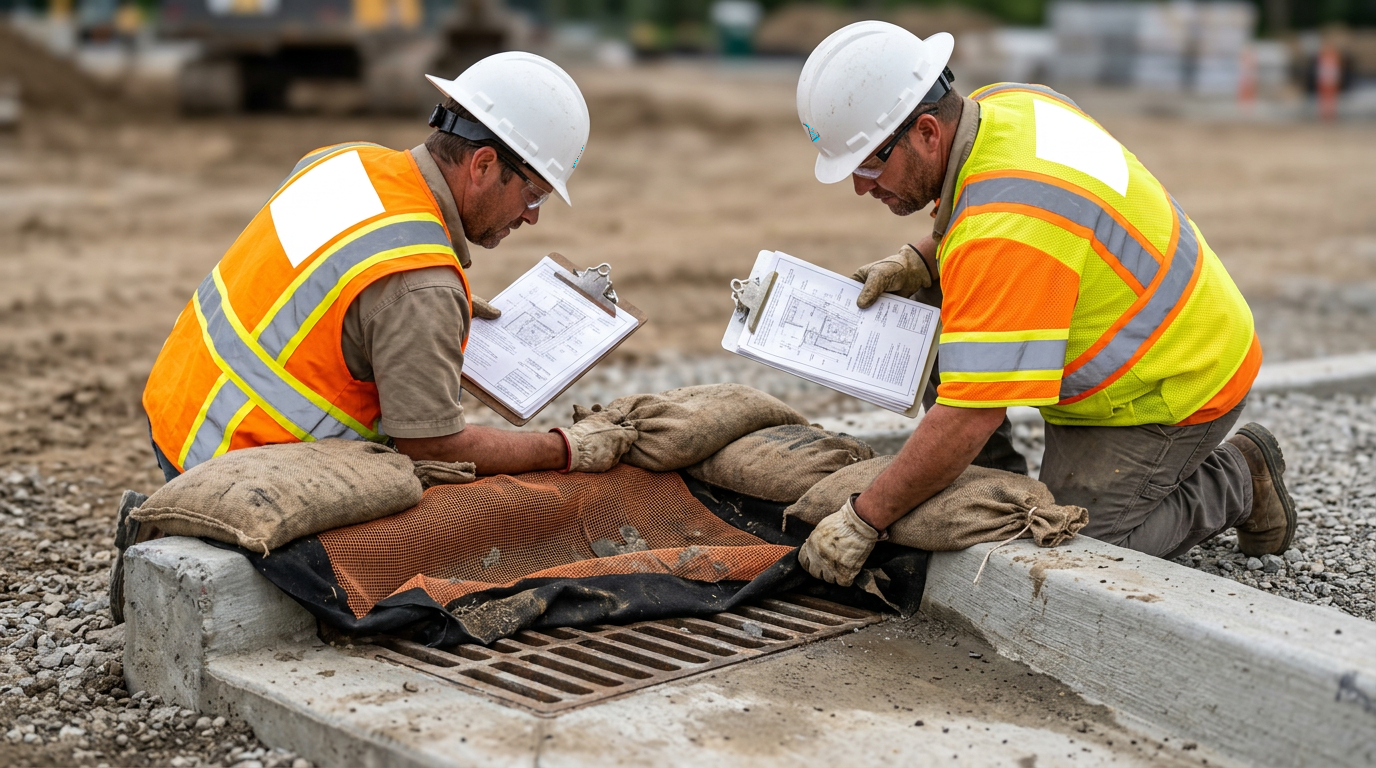
- Best Management Practices (BMPs) — the specific erosion controls (like hydroseeding and fiber rolls), sediment controls (silt fences, inlet protection, stabilized construction entrances), and good-housekeeping practices (concrete washouts, spill kits, material storage).
- Inspection, monitoring, and sampling procedures — including a Rain Event Action Plan (REAP) for higher-risk sites.
- Records and responsible parties — who the QSD and QSP are, and where inspection logs are kept.
The plan is a living document. As the site changes — grading finishes, buildings go vertical, landscaping goes in — the SWPPP must be amended to match current conditions.
Who writes and manages a SWPPP? (QSD vs. QSP)
California requires two certified roles:
QSD — Qualified SWPPP Developer: prepares, certifies, and amends the SWPPP. QSDs are typically engineers, geologists, or other credentialed professionals who have passed the state’s training.
QSP — Qualified SWPPP Practitioner: implements the plan in the field, performs the required inspections, and collects samples.
A QSD must develop the plan; a QSP must run it on-site. One firm often provides both. (For a full breakdown, see our upcoming guide: “QSD vs. QSP — Which Do You Need?”)
Skip the learning curve.
Zila’s certified QSDs and QSPs handle preparation, filing, and inspections — as California’s most trusted name in SWPPP compliance.
We’ll guide you from start to approval
SMARTS, the NOI, and your WDID number
California’s permit is administered electronically through SMARTS (Stormwater Multiple Application and Report Tracking System). To get covered, the project owner files a Notice of Intent (NOI) and uploads the SWPPP and Permit Registration Documents through SMARTS. Once accepted, the project is issued a WDID number (Waste Discharge Identification) — proof of coverage that many cities require before they’ll issue a grading permit. When construction is finished and the site is stabilized, the owner files a Notice of Termination (NOT) to close out coverage and stop the annual fees.
Do you need a SWPPP for your project?
The short version: if your project disturbs one acre or more of soil — or less than an acre but is part of a larger common plan of development — you almost certainly need permit coverage and a SWPPP. Smaller sites can still trigger local requirements. We cover the full decision tree in the companion guide, “Do I Need a SWPPP? California Construction General Permit Requirements.”
How Zila helps
Zila is California’s most trusted name in preparing SWPPPs. Our certified QSDs prepare and amend SWPPPs, run the SMARTS filings (NOI/NOT and WDID), select site-specific BMPs, and provide QSP inspections — so your project stays compliant and on schedule. We serve contractors, developers, and public agencies across California, including Los Angeles, Anaheim, Santa Ana, Moreno Valley, and Victorville — with customized pricing and price matching.
Need a SWPPP prepared or reviewed?
Zila’s certified QSDs and QSPs handle preparation, filing, and inspections — as California’s most trusted name in SWPPP compliance.
We’ll guide you from start to approval
Frequently Asked Questions
- What does SWPPP stand for?
SWPPP stands for Stormwater Pollution Prevention Plan — a site-specific document describing how a construction project keeps sediment and pollutants out of storm drains and waterways.
- When is a SWPPP required in California?
A SWPPP is generally required for construction that disturbs one acre or more of soil, or smaller sites that are part of a larger common plan of development, under the Construction General Permit (Order 2022-0057-DWQ).
- Who can write a SWPPP?
In California, a SWPPP must be prepared and certified by a Qualified SWPPP Developer (QSD). A Qualified SWPPP Practitioner (QSP) implements and inspects it in the field.
- How long does it take to get a SWPPP?
A straightforward SWPPP can often be prepared within a few business days, but timing depends on site complexity, risk level, and how quickly project documents are provided.
- What happens if I build without a SWPPP?
You risk stop-work orders, Notices of Violation, and Clean Water Act penalties that can reach tens of thousands of dollars per day, plus costly project delays.
Table of Contents
Get a Free Quote
Tell us what you need and we’ll respond with pricing details.
No obligation. Response within 24 hours.



Latest Insights
-
EPA SWPPP: The Federal Construction General Permit Explained
Quick answer: An EPA SWPPP is a Stormwater Pollution Prevention Plan required under the federal Construction General Permit (CGP) — the National Pollutant Discharge Elimination System (NPDES) permit the U.S. EPA issues for construction that disturbs one acre or more of land (or less, if part of a larger common plan of development). A SWPPP is a nationwide Clean Water…
-
Does a SWPPP Save Money? How the Right Plan Cuts Costs
Quick answer: Yes — a well-designed SWPPP saves money in three ways: it right-sizes your BMPs so you don’t over-build controls you don’t need or under-build ones that fail; it prevents costly incidents — a sediment discharge or failed control can trigger emergency cleanup, replacement BMPs, and stricter regulator-imposed requirements; and it avoids fines and stop-work orders that can cost tens of…
-
SWPPP Violations & Fines in California: What Non-Compliance Really Costs
Quick answer: In California, a SWPPP violation happens when a construction site fails to have, follow, or properly document its Stormwater Pollution Prevention Plan. Consequences range from a written Notice of Violation to a full stop-work order — and financial penalties that can reach tens of thousands of dollars per day, per violation under the federal Clean Water Act and…