
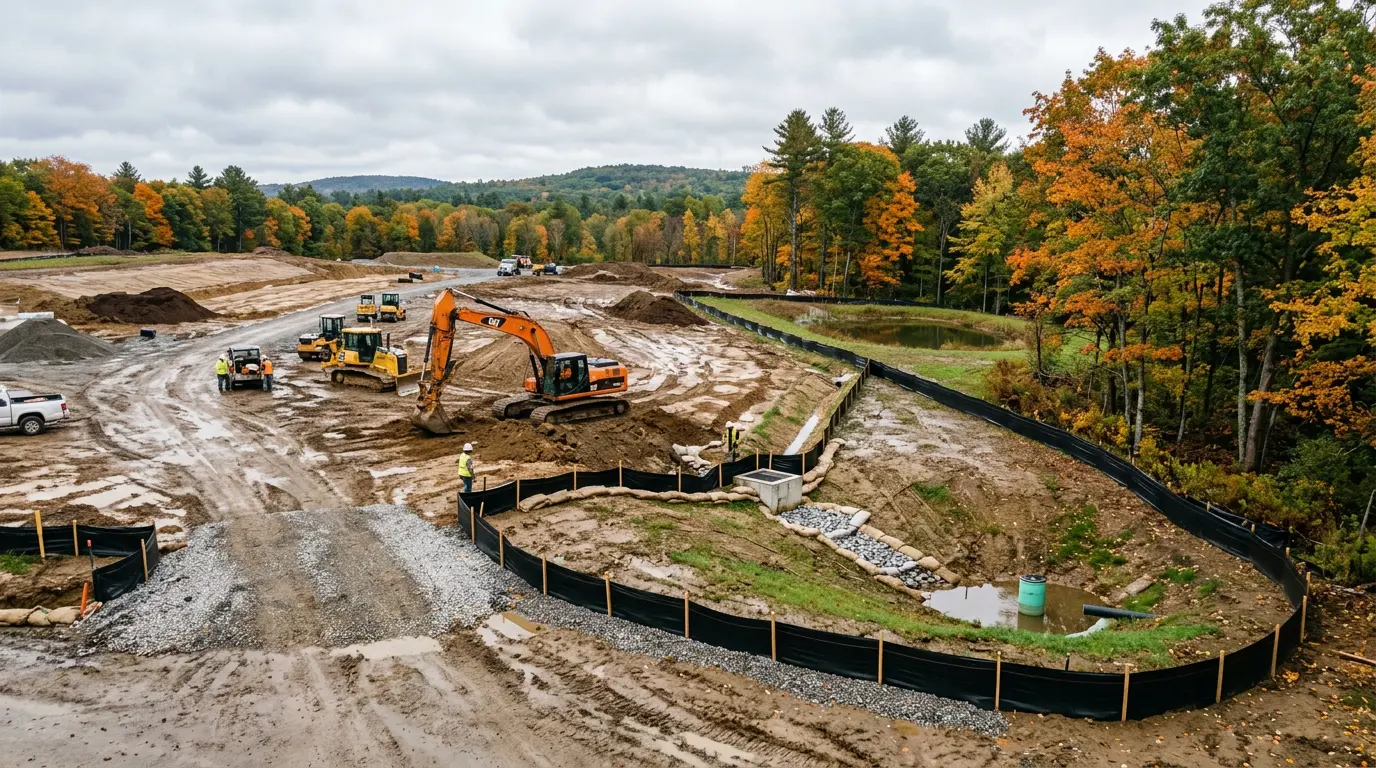
SWPPP Requirements in Massachusetts: What Contractors Need to Know
Quick answer: If your Massachusetts construction project disturbs one acre or more of land (or less if it’s part of a larger common plan of development), you need a Stormwater Pollution Prevention Plan (SWPPP) and coverage under the Construction General Permit (CGP). In Massachusetts, that permit is issued and administered by the U.S. EPA, and coverage is obtained by filing a Notice of Intent through EPA’s electronic system. Separate state and local stormwater rules — through MassDEP and your local conservation commission — can also apply.
Here’s what applies to construction in the Commonwealth, and how to stay compliant.
Zila prepares SWPPPs for Massachusetts construction projects.
From the plan to filing, we handle it end to end.
When is a SWPPP required in Massachusetts?
The trigger is the same one used nationwide under the Clean Water Act:
- One acre or more of land disturbance → a SWPPP and Construction General Permit coverage are required.
- Less than one acre, but part of a larger common plan of development or sale → also required.
“Land disturbance” means clearing, grading, excavating, or stockpiling — not just the building footprint — so total the whole project. (New to this? Start with What Is a SWPPP?.)
Which permit applies — and who administers it
Construction stormwater in Massachusetts is covered by the EPA’s Construction General Permit (the 2022 CGP). Coverage is obtained directly from the EPA — you prepare a SWPPP, then file a Notice of Intent (NOI) through EPA’s NeT (NPDES eReporting Tool) system, wait out the posting period until coverage is effective, implement and inspect the plan, and file a Notice of Termination (NOT) at completion. (For a full walkthrough of the federal permit, see EPA SWPPP: The Federal Construction General Permit Explained.)
Don’t forget the state and local layer
Federal permit coverage isn’t always the whole story in Massachusetts. Depending on your site, you may also need to satisfy:
- The Massachusetts Wetlands Protection Act, administered through your local Conservation Commission, which applies the state’s Stormwater Standards to work near wetlands and other resource areas.
- MassDEP requirements and, in many municipalities, local stormwater and MS4-driven ordinances with their own plan, erosion-control, and permitting rules.
A qualified professional makes sure your SWPPP satisfies the federal permit and dovetails with these state and local requirements — so nothing gets missed at plan review.
What goes into a Massachusetts SWPPP?
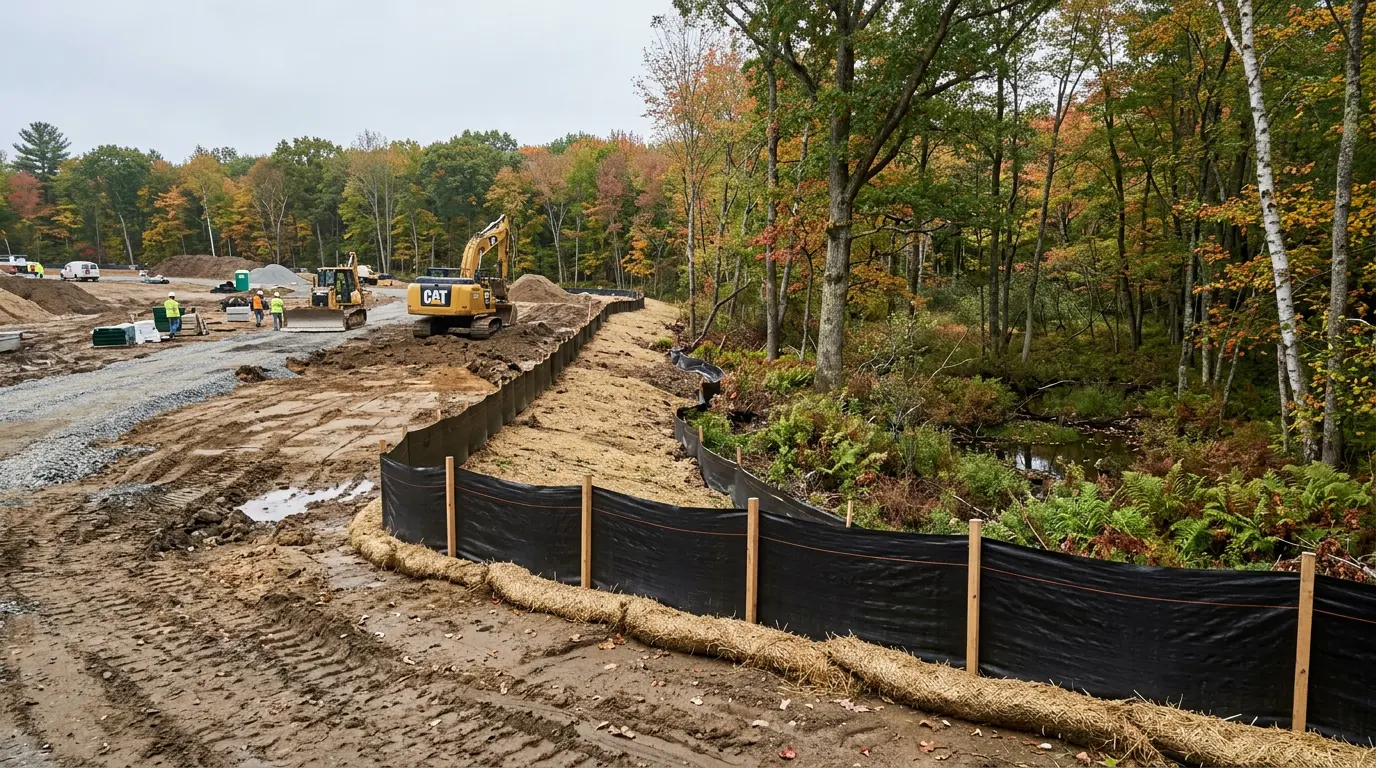
A compliant SWPPP includes a site and drainage description, an inventory of pollutant sources, the specific Best Management Practices (BMPs) — erosion controls, sediment controls, and good housekeeping — plus buffer/stabilization measures, an inspection schedule, and recordkeeping. New England’s freeze-thaw cycles and heavy seasonal rain make well-designed, well-maintained controls especially important.
Winter weather and wetlands make Massachusetts sites unforgiving.
Zila designs SWPPPs that hold up.
How Zila helps Massachusetts builders
Zila prepares and manages SWPPPs for construction projects across Massachusetts. We prepare a site-specific SWPPP, handle the EPA NOI filing, coordinate with the state and local requirements that apply to your site, select the right BMPs, and keep you inspection-ready from groundbreaking through your Notice of Termination.
Related reading: What Is a SWPPP? and EPA SWPPP: The Federal Construction General Permit Explained, and SWPPP Violations & Fines.
Frequently Asked Questions
- Do I need a SWPPP in Massachusetts?
Yes, if your construction project disturbs one acre or more of land (or less if it’s part of a larger common plan of development). A SWPPP and Construction General Permit coverage are required.
- Who issues the construction stormwater permit in Massachusetts?
The U.S. EPA administers the Construction General Permit in Massachusetts. Coverage is obtained by filing a Notice of Intent through EPA’s NeT system.
- Does MassDEP require anything for construction stormwater?
Potentially, yes. Beyond the federal permit, work near wetlands and resource areas is subject to the Massachusetts Wetlands Protection Act and Stormwater Standards, administered through local Conservation Commissions, and many municipalities have their own stormwater ordinances.
- How do I get construction stormwater coverage in Massachusetts?
Prepare a SWPPP, file a Notice of Intent through EPA’s NeT system, wait out the posting period until coverage is effective, implement and inspect the plan during construction, and file a Notice of Termination when the site is stabilized.
- What is the acreage threshold for a SWPPP in Massachusetts?
One acre of land disturbance, or less if the project is part of a larger common plan of development or sale.
Table of Contents
Get a Free Quote
Tell us what you need and we’ll respond with pricing details.
No obligation. Response within 24 hours.
Related Compliance Articles
- The Best SWPPP Inspection Software: What to Look For

- Do You Need a SWPPP in Texas? TCEQ’s Construction General Permit (TXR150000) Explained
- SWPPP Requirements in Massachusetts: What Contractors Need to Know
- SWPPP vs. WPCP vs. WQMP: Which Does Your California Project Need?
- EPA SWPPP: The Federal Construction General Permit Explained


Latest Insights
-
The Best SWPPP Inspection Software: What to Look For
Quick answer: The best SWPPP inspection software isn’t the one with the longest feature list — it’s the one that keeps you ahead of your permit deadlines and produces records you can defend in an audit. In practice, that comes down to a handful of things that actually prevent violations: knowing the moment an inspection is…
-
Do You Need a SWPPP in Texas? TCEQ’s Construction General Permit (TXR150000) Explained
Quick answer: Yes — if your Texas construction project disturbs one acre or more of land (or less if it’s part of a larger common plan of development), you need a Stormwater Pollution Prevention Plan (SWPPP) and authorization under the state’s Construction General Permit, TXR150000, administered by the Texas Commission on Environmental Quality (TCEQ). Unlike some…
-
SWPPP vs. WPCP vs. WQMP: Which Does Your California Project Need?
Quick answer: These three California stormwater documents are easy to confuse, but they cover different things. A SWPPP (Stormwater Pollution Prevention Plan) controls pollution during construction on sites disturbing one acre or more, under the state Construction General Permit. A WPCP (Water Pollution Control Plan) does the same job for smaller construction projects (typically under an…