

Does a SWPPP Save Money? How the Right Plan Cuts Costs
Quick answer: Yes — a well-designed SWPPP saves money in three ways: it right-sizes your BMPs so you don’t over-build controls you don’t need or under-build ones that fail; it prevents costly incidents — a sediment discharge or failed control can trigger emergency cleanup, replacement BMPs, and stricter regulator-imposed requirements; and it avoids fines and stop-work orders that can cost tens of thousands of dollars a day plus schedule delays. Treated correctly, a SWPPP isn’t overhead — it’s one of the cheapest forms of risk control on your project.
Most contractors see the SWPPP as a box to check. The ones who see it as a budgeting tool spend less overall. Here’s why.
Zila is California’s most trusted name in preparing SWPPPs.
A plan built right the first time is far cheaper than fixing one that wasn’t.
The mindset shift: a SWPPP is cost control, not a cost
It’s tempting to treat the SWPPP as a line item to minimize. But the plan itself is a small fraction of what stormwater problems can cost you. A poorly designed or under-implemented SWPPP doesn’t save money — it defers cost to the worst possible moment: mid-project, after a storm, or when an inspector is standing on your site. A good SWPPP moves that spend to the cheapest possible moment: the planning table, before you break ground.
1. Right-sized BMPs: pay for what your site actually needs
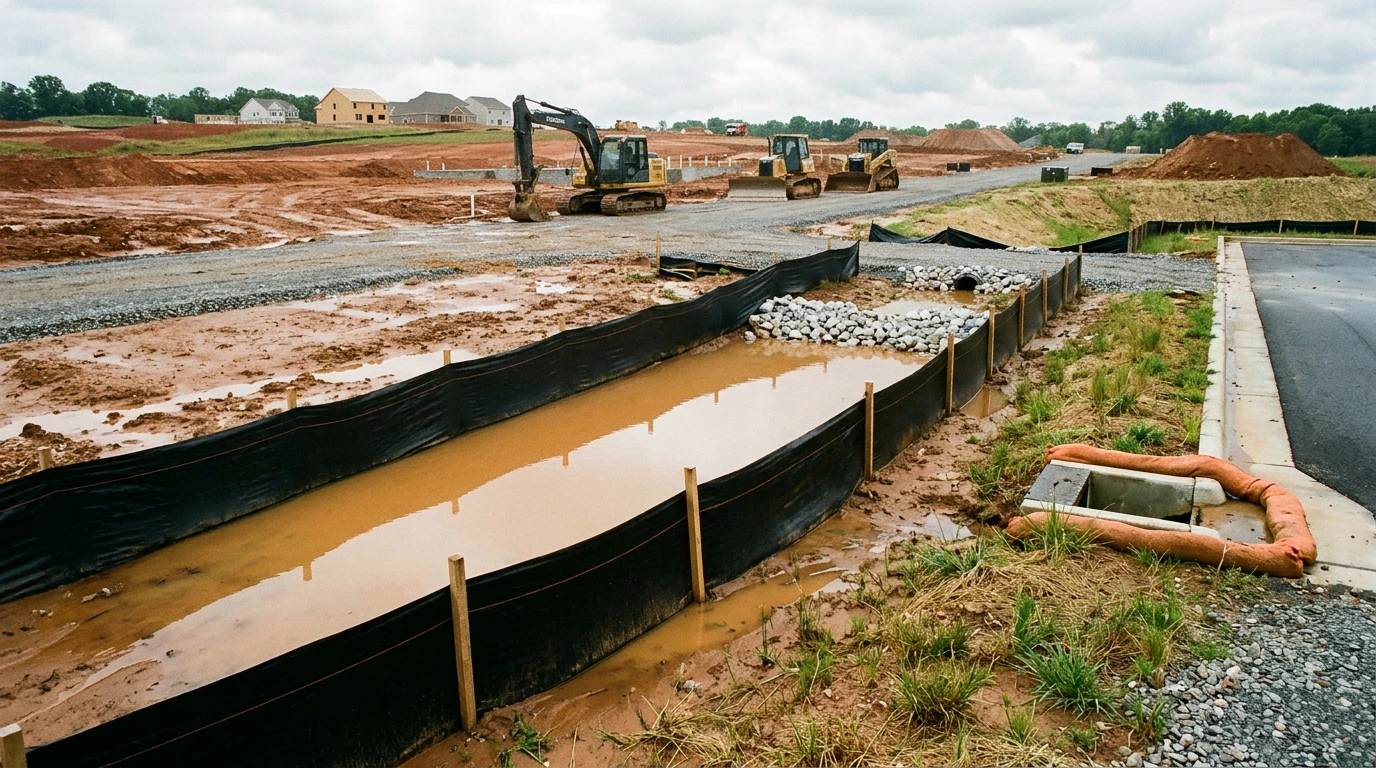
Best Management Practices (BMPs) — silt fences, inlet protection, stabilized entrances, sediment basins — are where most stormwater dollars go. There are two expensive mistakes here, and a qualified plan avoids both:
- Over-building. Installing more or heavier controls than your site’s Risk Level and conditions require is money spent for no compliance benefit.
- Under-building. Cutting corners on BMPs is worse — controls that are undersized or wrong for the site fail, and failure is far more expensive than doing it right (see below).
A SWPPP prepared by a qualified developer matches the right BMPs to your actual Risk Level, soil, slope, and drainage — so you’re neither wasting money nor setting yourself up to fail.
2. Prevention is cheaper than reaction
This is the big one. When a BMP fails and sediment leaves your site, the costs stack up fast:
- Emergency response and cleanup — mobilizing crews to contain and remove off-site sediment, often at premium rates.
- Replacement BMPs — you pay for the failed controls and their replacements.
- Rework and re-stabilization of areas that eroded.
- Stricter requirements going forward — regulators who see a failure often impose additional monitoring, sampling, or controls for the rest of the project.
- Potential third-party claims if sediment damages neighboring property or a waterway.
A single significant discharge can cost more than the entire SWPPP and its BMPs combined. Planning the right controls — and maintaining them through inspections — is what keeps that scenario from ever happening.
The most expensive BMP is the one you install twice.
Zila’s QSDs and QSPs design and monitor controls that hold up.
3. Avoiding fines and stop-work orders
Non-compliance carries direct penalties — Clean Water Act and state fines that can reach tens of thousands of dollars per day, per violation — but for most builders the bigger hit is the stop-work order. A halted site means idle crews and equipment, blown milestones, and liquidated-damages exposure that often dwarfs the fine itself. A SWPPP that keeps you inspection-ready is the cheapest insurance against both. (More detail in our guide to SWPPP Violations & Fines.)
4. Schedule protection = money
Every delay on a construction project has a carrying cost. A strong SWPPP protects your timeline in quiet but real ways: inspections pass without re-work orders, the plan is amended proactively as the site changes (rather than scrambling after a citation), and you avoid the days lost to a shutdown. Staying on schedule is one of the most underrated financial benefits of getting compliance right.
5. Protecting your record for the next bid
On public and larger private work, your compliance history follows you. A clean stormwater record keeps you eligible and competitive for future contracts; a history of violations can raise your costs — or cost you the bid entirely. A well-run SWPPP is an investment in your next project as much as this one.
The bottom line: small investment, large downside avoided
Zila is California’s most trusted name in preparing SWPPPs. We design plans that right-size your BMPs to your actual Risk Level, keep you inspection-ready with professional QSP monitoring, and head off the failures, fines, and delays that blow budgets. The goal isn’t just compliance — it’s protecting your project’s bottom line.
Related reading: What Is a SWPPP?, Do I Need a SWPPP?, and SWPPP Violations & Fines
Frequently Asked Questions
- Does a good SWPPP actually save money?
Yes. A well-designed SWPPP right-sizes your BMPs so you don’t overspend on unnecessary controls, prevents costly incidents like sediment discharges and BMP failures that trigger emergency cleanup and rework, and helps you avoid fines and stop-work delays. The plan typically costs a small fraction of what a single failure or violation can cost.
- Why is a failed BMP so expensive?
Because you pay multiple times — for emergency cleanup and off-site sediment removal, for the replacement controls, for re-stabilizing eroded areas, and often for the stricter monitoring regulators impose afterward. Preventing the failure is far cheaper than responding to one.
- Is it cheaper to write my own SWPPP?
No. In California a SWPPP must be prepared and certified by a Qualified SWPPP Developer (QSD). A DIY or generic plan that isn’t matched to your site is more likely to fail inspection or in the field — which costs far more than a properly prepared plan.
- How does a SWPPP protect my construction schedule?
By keeping you inspection-ready, amending the plan proactively as the site changes, and preventing the stop-work orders that halt a project. Avoided delays are one of the biggest financial benefits of strong stormwater compliance.
Table of Contents
Get a Free Quote
Tell us what you need and we’ll respond with pricing details.
No obligation. Response within 24 hours.



Latest Insights
-
EPA SWPPP: The Federal Construction General Permit Explained
Quick answer: An EPA SWPPP is a Stormwater Pollution Prevention Plan required under the federal Construction General Permit (CGP) — the National Pollutant Discharge Elimination System (NPDES) permit the U.S. EPA issues for construction that disturbs one acre or more of land (or less, if part of a larger common plan of development). A SWPPP is a nationwide Clean Water…
-
SWPPP Violations & Fines in California: What Non-Compliance Really Costs
Quick answer: In California, a SWPPP violation happens when a construction site fails to have, follow, or properly document its Stormwater Pollution Prevention Plan. Consequences range from a written Notice of Violation to a full stop-work order — and financial penalties that can reach tens of thousands of dollars per day, per violation under the federal Clean Water Act and…
-
Do I Need a SWPPP? California Construction General Permit Requirements
Quick answer: In California, you need a SWPPP if your construction project disturbs one acre or more of soil — or less than one acre but is part of a larger common plan of development or sale. Coverage is required under the statewide Construction General Permit (Order 2022-0057-DWQ, effective September 1, 2023). Even some sub-acre projects need one if…